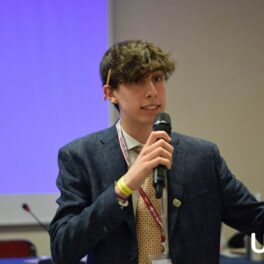
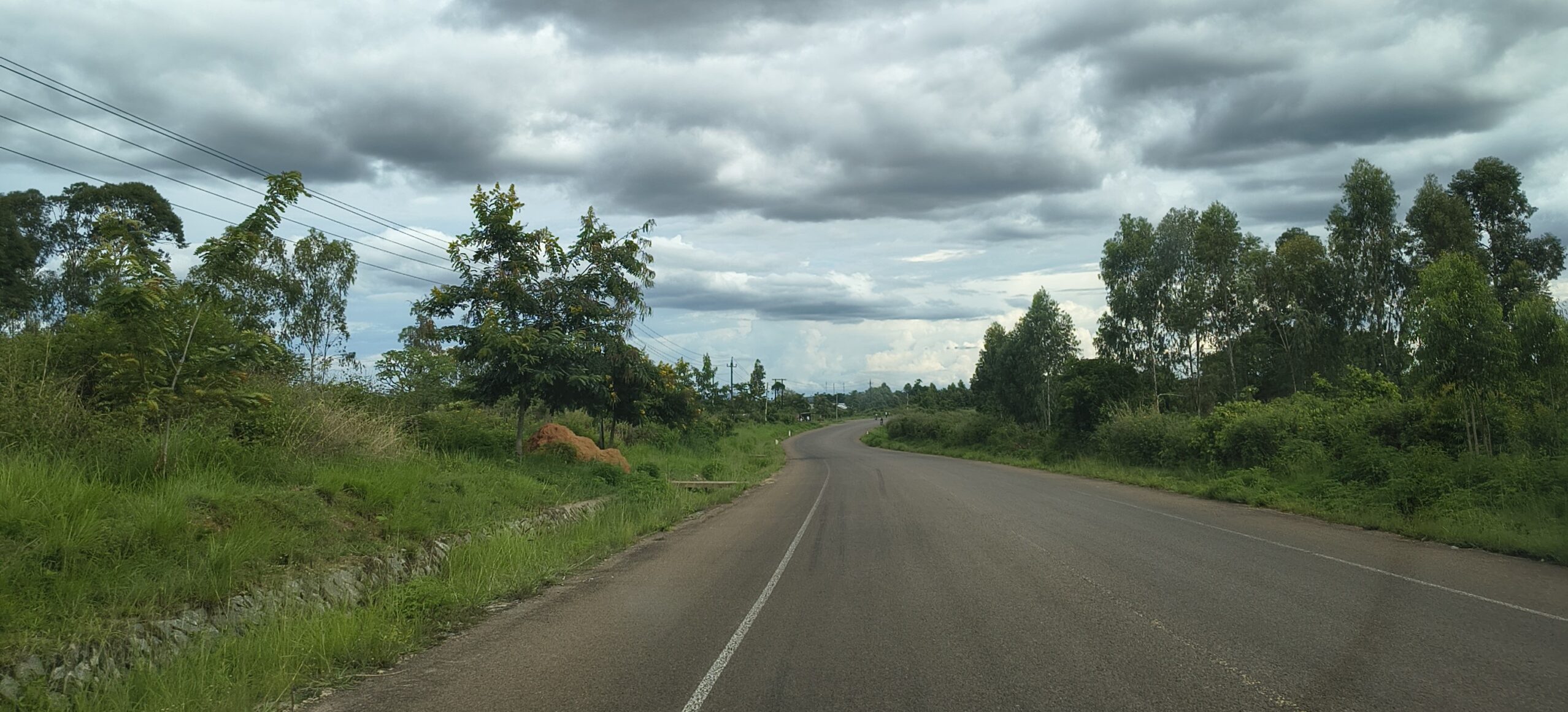
I had the unique opportunity to meet the organization staff in the field and assisted them in their exceptional work, thanks to a two-weeks trip of the author of this interview in Koboko, a town in the North Western Uganda, at the border with DRC and South Sudan. During those days in Koboko, I witnessed firsthand the transformative impact of ACAV’s interventions. I am here with Amule D. Isaac, who works for Associazione Centro Aiuti Volontari (ACAV), an Italian founded NGO which operates in Sub Saharan Africa, particularly in Uganda, Democratic Republic of Congo and South Sudan.
Hi Isaac, thank you for conceding this interview and for you work here. Could you introduce yourself and tell us what ACAV does in Uganda?
My name is Amule D. Isaac. I work with ACAV as a Senior Program Officer, and I have been in ACAV for 12 years now. That gives me an edge in understanding the operations and the interventions of the organization. First of all, I am very grateful to the people of Italy, the Italians and the Italian Government, and all people of goodwill, because ACAV’s huge support comes from Italy and from different parts of Italy. ACAV’s headquarters is in Trento, and here in Uganda ACAV has been working since the 1990s. And our primary focus revolves around community development, specifically in the sectors of water and sanitation where the organization rehabilitates non functional boreholes or does drilling of boreholes to provide access to clean and safe water to rural communities in the West Nile Sub region.
Secondly, the organization also supports agriculture and livelihood and targets smallholder farmers in the West Nile sub region and in the DRC. This is through provision of training in sustainable farming practices and distribution of improved seeds to farmers. Through these initiatives, ACAV has empowered households to transition from subsistence farming to more productive,market-oriented agriculture, ultimately fostering greater economic productivity for self-reliance and food security.
Besides, these, the ACAV is currently providing technical support to local governments particularly in Koboko Municipality and Arua City to implement donor funded projects under the Sustainable Urban Integration of Displacement Affected Communities (SUIDAC) and the project focus is to improve infrastructure such as schools, health, among others due to the presence of refugees in these peri urban settings. So ACAV works both in development and in humanitarian response in Sub Saharan Africa.
In Uganda, ACAV mainly operates in the West Nile sub region, can you tell our readers more about this region and the challenges it is currently facing?
The West Nile sub-region is found in the North Western part of Uganda. It is close to South Sudan and the Democratic Republic of Congo. These two countries continue to experience insurgencies with effects on Uganda, and particularly West Nile with influx of refugees or forced migration. The region serves as a primary gateway for those fleeing armed conflict, creating a complex humanitarian landscape.
West Nile sub region had also suffered from political instability and civil in Uganda. More especially after the 1979 war, that deposed Idi Amin until 1986. When the President Yoweri Kaguta Museveni came to power and begun rebuilding the nation. Prior to this many people from West Nile sub region were living in exile either in the Congo or in what is now South Sudan. When they returned to Uganda, the people started rebuilding their homes and communities; rebuilding schools, rebuilding markets, and practicing subsistence agriculture. This transition from displacement to resettlement was marked by a profound sense of resilience, as families painstakingly pieced together their shattered lives. The process of recovery was not merely physical, but a collective healing of the social fabric.
When you compare West Nile statistically with the rest of Uganda, West Nile is among the least developed areas. It is second from the bottom, just above Karamoja and if you visit West Nile, you can see the reality. Many people are still living in grass-thatched houses, communities still have challenges accessing safe and clean water and electricity is mainly in certain urban areas, but even within those urban areas, it is not equally distributed and communities heavily rely on subsistence agriculture. This means that many people are disengaged from the means and the ability to use electricity to do something to improve their living conditions. Here we can not talk of industrialization, it’s what you cannot think about it. There are no factories that can absorb or employee people and give opportunity to earn a living. People are barely relying on subsistence agriculture. Land is fragmented into smaller pieces and owned by different families and even use of tractors sometimes is challenging in certain rural areas.
Against this background, West Nile hosts a huge number of refugees, close to half a million. These refugees are in the districts of Koboko, Terego, Yumbe, Obongi Madi Okollo and Adjumani. There are also self-settled refugees who have integrated into the communities especially in Koboko and Arua City. So ACAV is faced with the reality of handling both refugees and host communities or nationals in designing and implementing projects.
The presence of refugees has created pressure on resources and services: land, water, schools, health facilities, and also on the environment as many people rely on firewood for cooking. This is the reality in West Nile, and this is where we need continued support in our interventions as ACAV to continue to improve livelihood conditions. People need to catch up with missed opportunities in development with the rest of the country. To be at the bottom is not nice. We are all humans. We need to live dignified lives.
ACAV’s work in this context has been precious and extensive, as I witnessed with my eyes here. Can I ask you to summarize what has ACAV concretely done in West Nile over the years
ACAV has a mark in terms of water and sanitation service provision. When you go to the villages around; in Koboko district, in Arua district, in Yumbe, in Terego, Adjumani, ACAV has made a huge contribution. We have constructed numerous boreholes and protected springs, significantly reducing the prevalence of waterborne diseases. ACAV has rehabilitated many broken-down or non functional boreholes, drilled boreholes, and helped communities get access to safe drinking water. Water is a precious commodity here. Today, you can see children playing with water in places where water had been scarce, and that really is a tangible change.
In agriculture, ACAV’s support has been to train smallholder farmers to move away from traditional methods of farming. Many farmers were practicing subsistence farming with declining yields, poor farming methods, poor seeds, and little knowledge. ACAV started building the capacity of such smallholder farmers to grow improved varieties of crops for food security. The crops such as cassava, beans and maize are important for the communities here in West Nile. In this field, ACAV provided knowledge and training, to help people understand how to grow these vital crops with higher yields. It also supported the farmers by providing them with inputs; improved seeds, cassava cutting for planting and extension services.
Government extension staff are very few. In one sub-county there may be 10,000, 15,000, 20,000 people, and only one extension officer. How long does it take for this one officer to move around to every smallholder farmer and give them guidance? So ACAV trained Community Animators to increase the number of extension service staff who work under organization. This has deepened farmers’ understanding and helps them to move away from poor traditional methods toward improved farming methods. These dedicated animators act as the bridge between theoretical knowledge and practical application, ensuring that advance agricultural techniques are not just disseminated, but effectively implemented on the ground.
Right now ACAV is providing technical support to Arua City and Koboko Municipality under the Sustainable Urban Integration of Displacement-Affected Communities (SUIDAC) project, indirectly managed by Cities Alliance and EU-funded. And you are also implementing youth skills development project along side the SUIDAC project, can you please tell us more about this project, why it is needed here, and what skilling means in practice?
Exactly, ACAV is currently implementing the Regional Skills Development for Youth Employment and Entrepreneurship (RESYEE) Project with funds from Fondazione San Zeno and Fondazione Gino Lunelli. This project supports both refugee youth and nationals from Koboko Municipality and Arua City in West Nile Sub Region. It’s a complimentary project to the Sustainable Urban Integration of Displacement Affected Community (SUIDAC) which is the main project funded by the European Union through Cities Alliance. The SUIDAC Project is implemented in Koboko Municipality and Arua City targeting nationals and refugees settled in these urban centers. In the SUIDAC Project ACAV, provides technical support to Koboko Municipality and Arua City to better implement donor funded projects. Our role as ACAV is to provide technical assistance to the two local governments, but it is them who are directly implementing the project.
The SUIDAC is broad project covers a number of areas such as improving educational infrastructure, health and among others. Given the presence of refugee communities in the two urban settings, infrastructures such as schools, health facilities are congested since government planning did not cover the refugee population. That’s it becomes important to expand the existing infrastructure to accommodate the refugee population in accessing services together with the nationals. In Uganda, pupil-teacher ratio is supposed to be 50 pupils to one teacher in a class. But the reality is different, Just to give the taste of the problem, in Rhino Camp Refugee Settlement close to Arua City, there was one classroom with 198 children and one single teacher. Even the teacher barely has space to move and instruct the class. The teacher cannot even memorize all the names of the children! This is the situation. So, the project helps to expand the existing infrastructure, so that schools can receive more children and reduce the pupil-classroom-teacher ratio. Similarly, it also works in the health sector, expanding health facilities in places such as in Koboko and Arua City is important due to the presence of the refugees.
Another important aspect of the intervention is youth skilling. A genuine issue in this region is the presence of vulnerable youth; those who have dropped out from school; teenage mothers, child-headed families among refugees. Many youth for other reasons have dropped out of school when they were ten or eleven and above. Most of them are refugees although there are also Ugandans. Due to forced migration some of these youth especially the refugees lost the opportunity for formal schooling. There is urgent need to train such youth to be able find an alternative livelihood opportunity working as a carpenter, tailor, as a maid in a restaurant or hotel. This emphasizes the importance of skill development for youth both refugees and host community or nationals.
Skills training basically means giving someone new practical skills in order to join in the labor market. For example, they may learn carpentry and joinery, so that they become carpenters and can make tables and chairs or furniture in general terms. People can buy those products, or they can get employed in a workshop and earn something. Others may learn electrical installation, building and construction, tailoring, or plumbing depending on the available courses. These youth are trained at vocational technical institutions. And depending on the project design, the training duration ranges from six months to ten months inclusive internship placement at relevant apprentices and job matching to increase the chances of employment in the private sector. ACAV plays a vital role terms of identifying good vocational institutions to conduct the training and firms for their internship placement with prospects of retaining some of these youth through job matching approach.
This project is important for the participants involved and for the whole community. Clearly, a youth who is skilled, he or she is given a chance; a chance to earn something and therefore a chance to live. At the same time, it’s important also for the community. Given limited land for farming, one can’t rely completely on farming alone: what else can you do? So, this is the connection why skills are needed for both the host community and the refugees living together.
During these days here, speaking with local actors and NGOs, many of them mentioned that resources are now a major issue. The recent cancellation of USAID program by President Trump and in general the crisis that is affecting international funding is hitting hard this region. Was ACAV affected as well?
It’s really unfortunately, we have realized that the landscape has changed. Funding globally has deteriorated significantly, and ACAV is also faced with this reality. We do not many have donors now as it used to be before. The demand is very huge, but the resources are very small. ACAV currently works in Uganda, the Democratic Republic of Congo, and South Sudan. In South Sudan, for example, the focus is on water and sanitation (WASH). Our staff have been rehabilitating non function boreholes in the Diocese of Yei in partnership with Caritas Yei. But because resources have dwindled, our efforts are very marginal, while the demand remains huge and we continue to receive requests.
It is the same in Congo. There are some refugees from South Sudan who are in settlements in the Congo and we are receiving appeal for support from local authorities there in the water sector and in agriculture and livelihood. Farming communities in the DRC are still faced with many challenges such as lack of improved seeds, inadequate extension service and lack of knowledge in modern farming methods. There is food insecurity which is associated with low production as result of poor farming methods coupled with growing low yielding crop varieties, etc. In West Nile region in Uganda, many youth come to our office and request for opportunities for skilling them. The demand is there every time but the resource basket is small.
With support from donors like the Autonomous Province of Trento the organization has supported rehabilitation, Fondazione San Zeno helped in the education sector, established a primary school in Rhino Camp Refugee Settlement to educate refugee children, and continuous to help in skilling vulnerable youth. The Italian government supported with school feeding program at Amuru primary school in Rhino Camp Refugee Settlement for two years. Individuals and some families from Italy have also supported ACAV efforts, sometimes they do this in memory of deceased family member.
Even though ACAV has not implemented a USAID project directly, we could clearly see how the recent cuts in USAID funding have also had an impact here in the sub region. Many international organizations working in humanitarian response in refugee setting with assistance through USAID, sadly, quite a number of such partners have closed and left or reduced their activities because of donor funding cuts. The result is that the vulnerable person who is supposed to be targeted is left without support. The crisis in funds have also affected food assistance. The World Food Programme has cut rations to refugees with certain categories no longer receive food assistance. Assistance mainly goes to new refugee who arrival from South Sudan or from the Democratic Republic of Congo. So the need continuous to multiply in front of us, while the resources have become smaller.
The West Nile region, also due to its weaknesses and its position that makes it an important hub for refugee, hosts a high number of local and international NGOs with several ongoing projects. Coordination and efficient planning become even more important in face of the lack of funds: how do NGOs coordinate in West Nile, and what are the main priorities moving forward?
In the West Nile sub-region, NGOs work together. NGOs are supervised by OPM, the Office of the Prime Minister, especially in the refugee settlements. OPM is the body in charge of refugees in Uganda. If you are working in humanitarian response, you must go through OPM, and OPM gives the clearance.
The NGOs have a Forum that brings all of them together (NGOs and UN Agencies); and they work according to sectors or what is called sector working groups. The NGO forum is chaired by OPM and UNHCR. For instance if you are working in protection, so you have the Protection NGOs working sector group. During sector working meetings they come together and share their reports. Then, there is Livelihood Sector working group, the Health Sector, Water and Sanitation, Education Sector, etc. ACAV falls into the Water and Sanitation Sector, Education and Livelihood, we were involved in all three areas. The idea is to make sure that refugees cultivate pieces of land and grow some food for themselves. Now that food assistance has been cut or reduced, so people need to stand on their own. Refugees may access small pieces of land, one quarter, two quarters, maybe half an acre, and plant crops like cassava, maize, and beans. In that way, they can get some food and become self reliant.
Peaceful co-existence is particularly important between the local population and the refugee community. This needs to continue for them to share resources with together as they live side by side. The focus is on basic things for life such as water, food, health and education. Moving forward, what is important is to help communities to build resilience. The humanitarian response, means supporting refugees so that they are able to stand on their own. We did that giving them knowledge in good agronomic practices and extension services, provision of agricultural inputs among others. ACAV works closely with OPM in the humanitarian setting and with local governments in some of the districts in West Nile sub region supporting development initiatives.
Education is a challenge right now because of the cutting of funds and the big enrollments in schools like Amuru primary school in Rhino Camp Refugee Settlement alone, where there are 3,000 pupils, it’s real struggle. Parents now making contribution in form of money to pay teachers because there is no longer funding coming from UNHCR to support the school. In this school, the parents are refugees who have very small pieces of land to cultivate. They need food for the families, they need to educate a child, they need to protect a child from disease. So this is the environment where we are working in the humanitarian response: amidst the odds, people still persist and resist. Again, that is why youth skilling is outstanding and has relevance now. A trained youth can hire out his/her labor to work either in a carpentry workshop, work as a tailor or work in a restaurant, or do something else to earn a living. Some of these are the ones venting for their parents
Thank you very much Isaac for both the clarity and humanity of your explanations. Now I’d say it is time to leave some room for the sentiment, which always drives us in our work with our neighbors. I’d like to hear from you what is the story or moment that has touched you most during your years with ACAV.
Wow, that’s a very interesting, I don’t know, it’s a thousand times most important question. I can start with this. My years in ACAV have brought me closer to living with the people who are really poor. ACAV’s interventions have focused to reach the most vulnerable in the communities. ACAV’s interventions have focused on reaching the most vulnerable, and that is what has touched me most. We are the people on the ground, the foot soldiers in the frontiers. We see with our eyes. We are the witnesses. We see what people go through. In the refugee environment, you see child-headed families. Maybe the parents are older, or maybe the children escaped the war and came into refuge alone. You see this troubling life, and when we come across; this touches us too.
With the nationals, it is also the same. Poverty is an issue. Lack of education, lack of skills, lack of opportunities. Sometimes opportunities can be there, but the capacity is low. That is why we need to teach people, to expand their capacity, and to help them build resilience for themselves. There are people, especially youth, who have seen their lives transformed through our work. They are now able to support their families. They have stood their ground alone. Some are even helping to educate others. I can say that these results, I have witnessed with my eyes and it makes me proud.
If there was one message you wanted to leave, what would it be?
That’s difficult. I would say that what is important to me is humanity across the line. Through small contributions, we can change the world. The communities that now have access to clean and safe water, youth who have transformed and are supporting their families through skills development, these are the changes.
We have made a contribution, and we still continue to make contribution. But the need is so immense, it continues to multiply in front of us. Development interventions will never stop as long as mankind is around, as long as humanity is around, we need to work together, we need support those living vulnerable lives to give them hope and chance. On this point let me also say that I remain hugely indebted and full of gratitude that my years in ACAV have turned out to be productive because of the hands that have given to us. The support that has come from donors has made our hands useful. So please let me say a big thanks to them again.
I want to thank even you, Alessandro and the editorial team for Eureka Press for this moment. I want to thank you because this has helped us amplify our voices. One or two people will hear our voices and say “I want to be part of the team to cause change”. You have not come in vain. You have come to change. You have also made a contribution. Thank you. God bless you.
interview by Alessandro Ceschel
Many thanks again to the whole ACAV Koboko team for making this interview possible, and to Amule D. Isaac and ACAV management for careful review of its content before publication.